A home gym gives you the freedom to train on your own schedule. No commute, no waiting for equipment, and no membership fees. However, there is one problem that almost every home gym owner faces sooner or later: poor airflow.
When air does not move freely through your training space, heat builds up fast. Humidity rises. The room starts to smell. Your performance drops, and your sessions become harder than they need to be. The frustrating part is that many people assume the only fix is expensive mechanical ventilation or a powerful air conditioning unit.
That is not true. There are several highly effective ways to improve airflow in your home gym naturally, without spending a fortune or installing complicated equipment. This article walks you through all of them, from quick wins to longer-term changes that make a lasting difference.
Airflow is not just about comfort. It directly affects how well you train and how safe your environment is.
During exercise, your body generates significant heat. Your lungs also consume more oxygen and release more carbon dioxide than at rest. In a poorly ventilated room, carbon dioxide levels rise over time. Even a modest increase makes you feel drowsy and reduces your ability to concentrate. Your perceived effort goes up, and your actual performance goes down.
Additionally, stagnant air holds moisture. Every breath you exhale adds humidity to the room. Sweat on your skin and equipment adds even more. High humidity slows sweat evaporation, which is your body’s main cooling mechanism. Therefore, improving airflow helps your body regulate temperature more efficiently, meaning you can train harder and longer before fatigue sets in.
There is also a hygiene angle worth mentioning. Bacteria and mould thrive in warm, humid, still air. Gym mats, foam rollers, and upholstered benches can harbour microbial growth if the air around them never dries out. Better airflow keeps surfaces drier and your gym healthier.
Starting with Your Room Layout
Before you look at windows, vents, or plants, take a hard look at how your gym is arranged. Room layout has a surprisingly large impact on how air moves through a space.
Clear the Path for Air to Move
Furniture, equipment, and storage items placed against walls or blocking doorways can interrupt natural airflow patterns. Air needs clear pathways to enter a room, circulate, and exit. If your squat rack is pressed against the only window or your storage shelves block the doorway, you are creating barriers that trap air in pockets around your equipment.
Try to position your largest pieces of equipment away from windows and doors. Leave at least 60 centimetres of clearance around the main entry and exit points of the room. This small change allows air to flow more freely even before you open a single window.
Position Equipment to Benefit from Natural Drafts
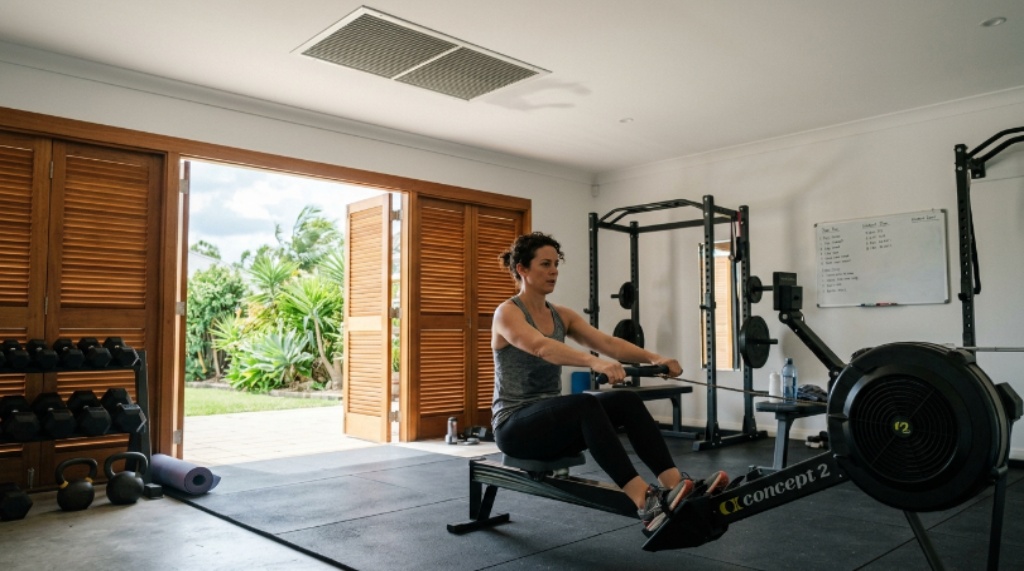
Once you have identified where your natural airflow enters the room, place the equipment you use most intensely closest to that source. Your treadmill, stationary bike, or rowing machine should sit in the path of incoming fresh air. Weightlifting areas, where sessions are shorter and less aerobically intense, can be positioned further from the primary airflow source.
Using Windows and Doors to Create Natural Ventilation
Windows and doors are your most powerful natural ventilation tools. Used correctly, they can transform the air quality in your gym without any mechanical assistance.
Open Opposite Windows for Cross-Ventilation
Opening a single window creates very limited airflow. Air enters but has nowhere to go, so it barely moves. Opening two windows on opposite sides of the room, or on different walls, creates a pressure difference. Fresh air flows in through one opening and warm, stale air is pushed out through the other.
This effect is called cross-ventilation, and it is one of the oldest and most reliable ways to ventilate any space. In a home gym, it can produce a steady, noticeable breeze that makes a real difference during intense sessions. Therefore, if your room has only one window, keeping the door open to create a second outlet significantly improves the effect.
Use the Stack Effect to Your Advantage
Warm air rises. This is a basic physical principle, and it works in your favour if you know how to use it. Opening a lower window or vent allows cool air to enter near the floor. Opening a higher window, a skylight, or even a rooftop vent allows hot air to escape near the ceiling.
This movement of air from low to high is called the stack effect or chimney effect. It occurs naturally and requires no energy to maintain. If your gym space has windows at different heights, experiment with opening the lower one slightly and the upper one fully to encourage this upward airflow.
Time Your Ventilation Around the Weather
Natural ventilation works best when the outside air is cooler than the inside air. In summer, this usually means early morning and late evening are ideal times to open windows fully. Midday air is often hotter than your indoor temperature, so keeping windows closed and using other strategies during peak heat hours is more effective.
In cooler seasons, you have more flexibility. Additionally, windy days enhance natural ventilation dramatically, so take advantage of breezy conditions by opening windows on the windward side of your home.
Adding Plants to Improve Air Quality and Circulation
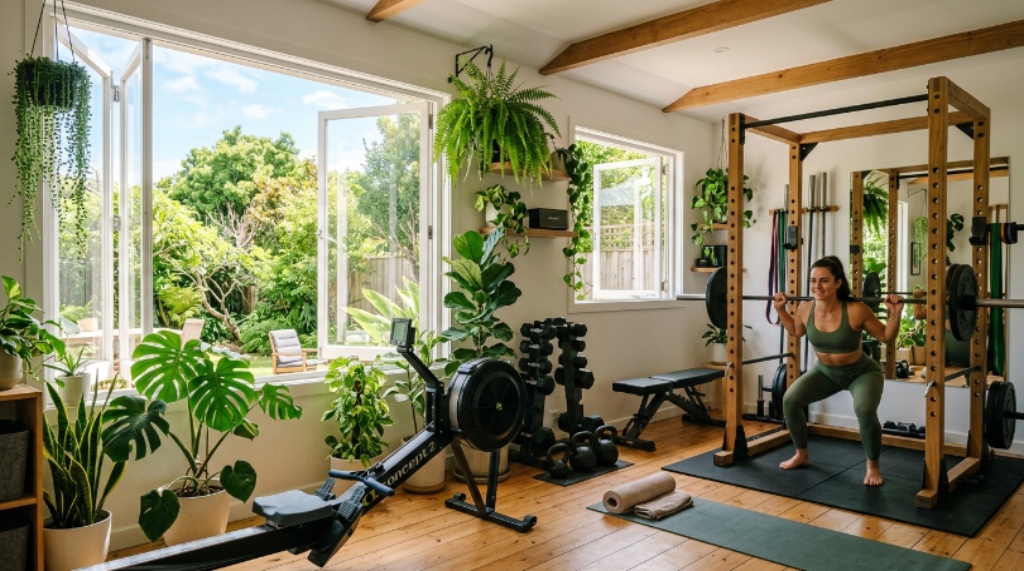
Plants are a natural and attractive way to improve the air in any indoor space. They absorb carbon dioxide, release oxygen, and help regulate humidity through a process called transpiration.
For a home gym, choose robust, low-maintenance species that thrive in warm, humid conditions. Peace lilies, spider plants, Boston ferns, and snake plants are all excellent choices. They require minimal care, tolerate fluctuating temperatures, and are effective at filtering common indoor air pollutants.
Place plants near the edges of the room rather than directly in your training path. A few medium-sized plants distributed around the perimeter of the gym provide better air quality benefits than a single large specimen in one corner. However, avoid overwatering, as soggy soil can introduce mould and unpleasant odours into the space.
Simple Structural Adjustments That Improve Natural Airflow
Sometimes, improving airflow in your home gym naturally requires a small amount of structural work. These changes are not complex or expensive, but they can have a significant long-term impact.
Install Vented Door Panels or Louvred Doors
If your gym is in a room with a solid door, replacing it with a louvred door or installing a vent grille in the lower and upper panels allows air to pass through even when the door is closed. This is especially useful if the room shares a wall with a hallway or another well-ventilated space.
A louvred door costs relatively little and requires no electrical installation. It improves passive airflow throughout the day, including when you are not training, which helps keep the room fresher and drier overall.
Add a Roof or Ceiling Vent
If your gym is in a loft, attic conversion, or top-floor room, a roof vent or ceiling exhaust panel can be transformative. Hot air that collects near the ceiling has a direct escape route, which keeps the lower portion of the room cooler and more comfortable.
Some ceiling vents are passive, meaning they require no electricity and work purely on the principles of natural convection. Others include a small solar-powered fan that enhances airflow during daylight hours without adding to your energy bill. Either option is a practical and efficient improvement for spaces where heat accumulates at the top of the room.
Use Door Gaps and Threshold Space
Even without structural changes, the gap at the bottom of a door acts as a small but functional air vent. If your gym door has a thick draught excluder or a tight threshold seal, removing it allows a small but steady flow of air to pass underneath. This is a minor change that costs nothing and contributes to the overall circulation in the room.
Managing Humidity to Support Better Airflow
Humidity and airflow are closely linked. When humidity is high, air feels heavier and movement feels less refreshing even when airflow is technically present. Managing moisture levels in your gym helps your ventilation efforts work more effectively.
Hang wet towels and clothing outside the gym to dry rather than leaving them on equipment or a rack inside the room. Moisture from wet fabric evaporates into the air and raises humidity levels quickly. Additionally, wipe down equipment after every session to remove sweat from surfaces. This reduces the amount of moisture that evaporates into the room over the hours between your workouts.
If your gym consistently feels damp even with good ventilation, a small moisture-absorbing product placed in a corner can help. Natural options include calcium chloride crystals or bamboo charcoal bags, both of which absorb excess humidity without electricity or chemicals.
Conclusion
Improving airflow in your home gym naturally is one of the most impactful things you can do for your training environment. It costs little, requires no major installation, and produces results you can feel from your very first session after making changes.
Start with your layout. Clear pathways, position equipment thoughtfully, and ensure your room has at least two air exchange points. Use cross-ventilation by opening opposite windows and learn to work with the natural stack effect on warm days. Add plants for ongoing air quality benefits. Consider simple structural upgrades like louvred doors or passive ceiling vents if you train in a consistently warm or poorly ventilated space.
When you learn how to improve airflow in your home gym naturally, you are not just making your sessions more comfortable. You are creating a healthier, more hygienic environment where you can consistently perform at your best. Good air is foundational to good training. With the practical steps in this guide, there is no reason your home gym cannot have both.
Frequently Asked Questions
What is the fastest way to improve airflow in a home gym?
The fastest method is cross-ventilation. Open windows or doors on opposite sides of the room simultaneously to create a pressure difference that pulls fresh air in and pushes stale air out. This costs nothing and can be done immediately.
Do indoor plants actually improve air quality in a gym?
Yes, to a meaningful degree. Plants absorb carbon dioxide and release oxygen through photosynthesis. They also help regulate humidity through transpiration. Spider plants, peace lilies, and snake plants are particularly effective and require minimal maintenance.
How do I stop my home gym from smelling stale?
Stale odours come from poor air circulation, trapped moisture, and bacteria growing on surfaces. Improve ventilation using the tips in this guide, wipe down all equipment after each use, allow the room to air out fully between sessions, and use bamboo charcoal bags to absorb residual moisture and odours naturally.
Is it worth installing a ceiling vent in a home gym?
For gyms in loft rooms, attic conversions, or top-floor spaces where heat collects near the ceiling, a passive ceiling vent can make a dramatic difference. It allows hot air to escape continuously throughout the day, keeping the room noticeably cooler and better ventilated without any running costs.
How many windows does a home gym need for good natural ventilation?
At a minimum, two air exchange points are needed for effective cross-ventilation. These can be two windows, a window and a door, or a window and a vent. More openings give you greater flexibility to adapt to different wind directions and temperatures throughout the year.