Walk onto any modern hospital floor today, and you will notice something different from just a few years ago. Screens display real-time patient data. Algorithms flag early warning signs before a doctor even enters the room. Patients video call their surgeon from another continent weeks before they ever board a flight. This is the new face of global healthcare, and this October, it will be on full display in the north of England.
This article explores the treatments driving demand, the clinics shaping the conversation, and the innovations changing how international patients experience care.
The Expo at a Glance
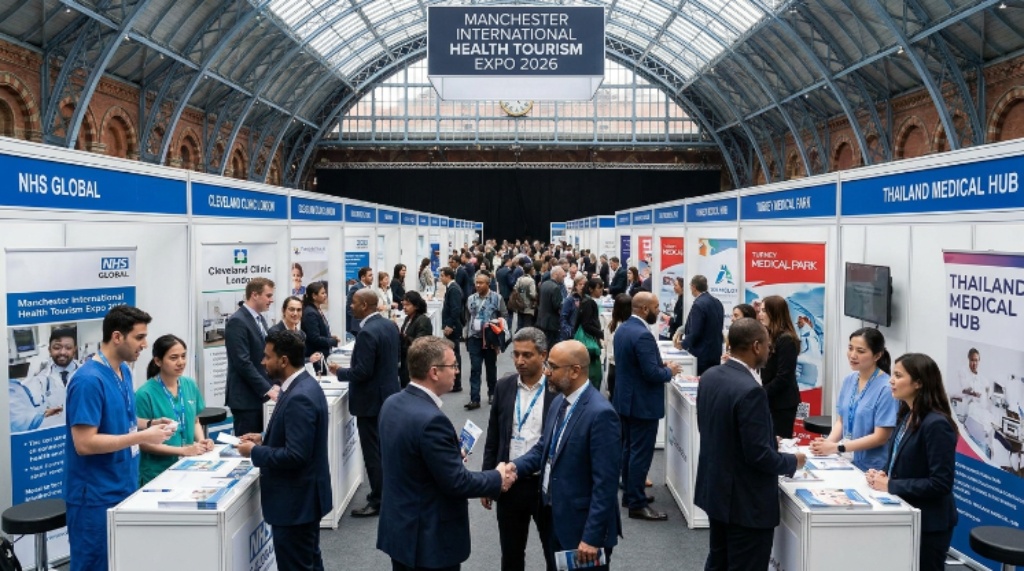
The Manchester International Health Tourism Expo takes place on October 10 and 11, 2026, at the Manchester Central Convention Complex. Organized by ALZ International, the event brings together hospitals, clinics, and medical travel facilitators from across the world.
The format is straightforward but effective. Exhibitors set up booths showcasing their specialties, accreditation, and patient outcomes. Visitors, whether they are facilitators, agency representatives, or patients themselves, move between booths to compare options, ask questions, and build relationships. Therefore, the value of the event lies less in lectures and more in direct, face-to-face conversation.
Manchester’s central location makes the show accessible to visitors from across the UK and Europe, with the airport just a short distance from the venue itself.
Top Treatments Patients Are Searching For
Before looking at clinics and technology, it helps to understand which treatments are actually driving the global conversation. The categories below dominate patient interest heading into the 2026 expo season.
Cosmetic and Aesthetic Surgery
Cosmetic procedures remain the single largest category in global medical tourism. Rhinoplasty, liposuction, breast augmentation, and hair transplants continue to draw the highest volume of international patients, often because of significant price differences between countries and because surgeon experience can vary widely depending on procedure volume.
Dental Restoration
Dental implants, veneers, and full-arch restorations remain extremely popular, particularly among patients combining treatment with a short holiday. Cost savings on dental work abroad can be considerable, making this one of the most accessible entry points into medical travel for first-time patients.
Fertility and Reproductive Care
Fertility treatment, including IVF and egg donation, is one of the fastest-growing categories in the industry. Long domestic waiting lists are pushing more couples to explore international clinics with shorter timelines and, in many cases, more advanced laboratory technology.
Orthopaedic and Joint Procedures
Hip and knee replacements remain a steady source of demand, especially among older patients facing long public healthcare waiting lists. Many destination hospitals now offer minimally invasive techniques that shorten recovery time considerably compared to traditional surgery.
Wellness and Preventative Health
Beyond surgical procedures, an entirely separate category has grown around wellness and prevention. Longevity check-ups, sleep optimization programs, and stress recovery retreats are increasingly bundled alongside traditional medical travel packages, reflecting a broader shift toward proactive rather than reactive healthcare.
Clinics and Hospitals to Watch
While individual exhibitor lists vary by year, certain types of healthcare providers consistently stand out at events like this one, and it is worth understanding what separates a strong international provider from an average one.
Internationally accredited hospitals carry a distinct advantage. Accreditation bodies such as Joint Commission International evaluate hospitals against rigorous safety and quality standards, and patients increasingly treat this as a non-negotiable requirement before booking treatment abroad. Therefore, exhibitors who can clearly demonstrate accreditation status tend to attract far more serious inquiries on the show floor.
Specialty clinics also play an important role. Smaller, focused practices often allow more direct interaction between physician and patient than larger hospital systems, which can lead to more personalized care and higher satisfaction. This is particularly true in categories like cosmetic surgery and dental restoration, where the relationship between patient and treating doctor matters enormously.
Additionally, hospitals that have invested in dedicated international patient departments tend to stand out. These departments typically offer multilingual support, coordinated travel logistics, and a single point of contact throughout the patient journey. For patients navigating treatment in an unfamiliar country, this kind of structured support can make an enormous difference to the overall experience.

Health Innovations Transforming the Patient Journey
Technology has become one of the defining forces reshaping medical tourism, and the 2026 expo reflects just how far this shift has progressed.
Telemedicine Before and After Travel
Virtual consultations have become a standard part of the international patient journey. Patients increasingly speak with their treating physician through secure video platforms before ever booking a flight, allowing both sides to confirm suitability and set expectations early. After treatment, the same technology supports recovery monitoring once the patient has returned home, reducing the need for repeat travel and easing concerns about follow-up care.
Artificial Intelligence in Diagnostics
AI-powered diagnostic tools are increasingly used to support earlier and more accurate detection across a wide range of conditions. These systems analyze medical images, lab results, and patient history far faster than manual review alone, helping clinicians catch patterns that might otherwise be missed. For international patients, this can translate into faster, more confident treatment decisions before they even leave home.
Wearable Devices and Remote Monitoring
Remote patient monitoring through wearable devices is moving from a niche feature into a standard part of post-treatment care. Continuous data on heart rate, recovery metrics, and activity levels allows clinical teams to track a patient’s progress long after they have left the treating country, supporting earlier intervention if something looks off.
Digital Health Records Across Borders
Secure digital health records are increasingly used to coordinate care between a patient’s home physician and their treating specialist abroad. This reduces duplication, minimizes communication gaps, and helps ensure that critical medical history is not lost in translation between healthcare systems.
Bundled Global Care Packages
A growing number of hospitals are now offering comprehensive packages that combine in-person treatment with structured online supervision before and after the trip. These packages typically include visa support, airport transfers, interpreters, and a defined recovery plan, removing much of the planning burden that once made international treatment feel intimidating to first-time patients.
What This Means for Visitors and Exhibitors
For exhibitors, the message from these innovations is clear. Patients increasingly expect more than a single procedure. They expect a coordinated, technology-supported journey from first inquiry through full recovery. Hospitals and clinics that can clearly demonstrate this kind of structured patient pathway will likely stand out far more than those relying on price alone.
For visitors and prospective patients, these innovations offer welcome reassurance. The following points are worth keeping in mind when evaluating providers at the expo:
- Ask whether virtual pre-treatment consultations are available before committing to travel.
- Check whether the hospital uses internationally recognized accreditation, and ask for specifics rather than general claims.
- Ask how follow-up care is structured once you return home, including whether remote monitoring tools are part of the package.
- Request clarity on who will actually perform your procedure, not just which hospital brand is involved.
- Compare bundled package pricing carefully, since all-inclusive models can sometimes obscure the true cost of individual components.
Therefore, a thoughtful, well-prepared visitor can use the expo not just to compare prices, but to evaluate which providers have genuinely modernized their approach to patient care.
Looking Beyond the Show Floor
The broader medical tourism industry is shifting quickly, and the conversations at this expo reflect trends playing out globally. Hospitals in major hubs across Asia, the Middle East, and Europe are investing heavily in smart hospital infrastructure, combining connected devices, electronic records, and AI-driven workflows to improve both safety and efficiency. This investment is no longer optional for providers hoping to compete for international patients.
However, technology alone does not guarantee a good outcome. Patients are still encouraged to verify accreditation, research the specific surgeon or specialist who will treat them, and plan for realistic recovery timelines before committing to any procedure abroad. The innovations on display at the expo are best understood as tools that support good decision-making, not replacements for careful research.
Conclusion
The Manchester International Health Tourism Expo 2026 captures a healthcare industry in the middle of genuine transformation. Running October 10 and 11 at Manchester Central Convention Complex, the event brings together hospitals, clinics, and facilitators around the treatments driving global demand, from cosmetic surgery and dental restoration to fertility care and orthopaedic procedures. Increasingly, the providers that stand out are those embracing telemedicine, AI-powered diagnostics, remote monitoring, and coordinated digital health records to support patients before, during, and after treatment. For exhibitors, the event offers a direct path to UK-based patients and agencies seeking trustworthy partners. For visitors, it offers a rare opportunity to compare providers face-to-face and ask the kinds of detailed questions that protect against poor outcomes. As medical tourism continues to evolve, expos like this one are becoming essential meeting points between innovation, trust, and patient care.
Frequently Asked Questions
When and where is the Manchester International Health Tourism Expo 2026?
The event takes place on October 10 and 11, 2026, at the Manchester Central Convention Complex in Manchester, United Kingdom.
What treatments are most commonly discussed by exhibitors at the event?
Cosmetic and aesthetic surgery, dental restoration, fertility treatment, and orthopaedic procedures are the leading categories. Wellness and preventative health packages are also a growing area of interest among exhibitors and patients alike.
What innovations are changing how international patients experience treatment?
Telemedicine consultations, AI-powered diagnostic tools, wearable remote monitoring devices, and secure cross-border digital health records are among the most significant innovations shaping the patient journey in 2026.
How can I tell if a clinic or hospital exhibiting at the expo is reputable?
Look for internationally recognized accreditation, ask specific questions about the treating physician’s qualifications, and request clarity on how follow-up care is managed once you return home. Reputable providers will answer these questions clearly and directly.
Is medical tourism becoming safer because of new technology?
Technology such as telemedicine and remote monitoring has improved continuity of care and communication between patients and providers. However, technology supports good decision-making rather than replacing it, so careful research into accreditation and surgeon credentials remains essential.