Swollen legs are more common than most people think. Whether it happens after a long day on your feet, during pregnancy, or as a result of a medical condition, the discomfort can be hard to ignore. The good news is that one of the simplest and most effective solutions is already available in most homes — or can be easily added to one.
A wedge pillow is a practical tool for managing leg swelling. It lifts your legs above your heart level, which helps fluid drain away from the lower limbs. However, not every wedge pillow works the same way. Choosing the wrong one can leave you uncomfortable or fail to provide the relief you need.
This guide covers everything you need to know about picking the right wedge pillow for leg swelling at home. From materials and angles to size and sleeping position, every detail matters.
Before choosing a product, it helps to understand the problem. Leg swelling, also called edema, occurs when fluid builds up in the tissues of the lower legs, ankles, or feet. This can happen for many reasons.
Sitting or standing for long periods slows circulation. Blood and fluid start to pool in the lower legs. Pregnancy puts extra pressure on the veins, making it harder for blood to return to the heart. Certain medications, heart conditions, and kidney issues can also cause swelling.
In many cases, elevation is one of the first things doctors recommend. When you raise your legs, gravity does the work. Fluid moves away from the affected area and back toward the core of the body. This reduces pressure, eases pain, and helps the swelling go down. A wedge pillow makes this process easier, especially when resting or sleeping.
What Is a Wedge Pillow and How Does It Work
A wedge pillow is a triangular foam or inflatable cushion designed to prop up a specific part of the body. Unlike regular pillows, it holds its shape throughout the night. It does not flatten under your weight or shift out of position.
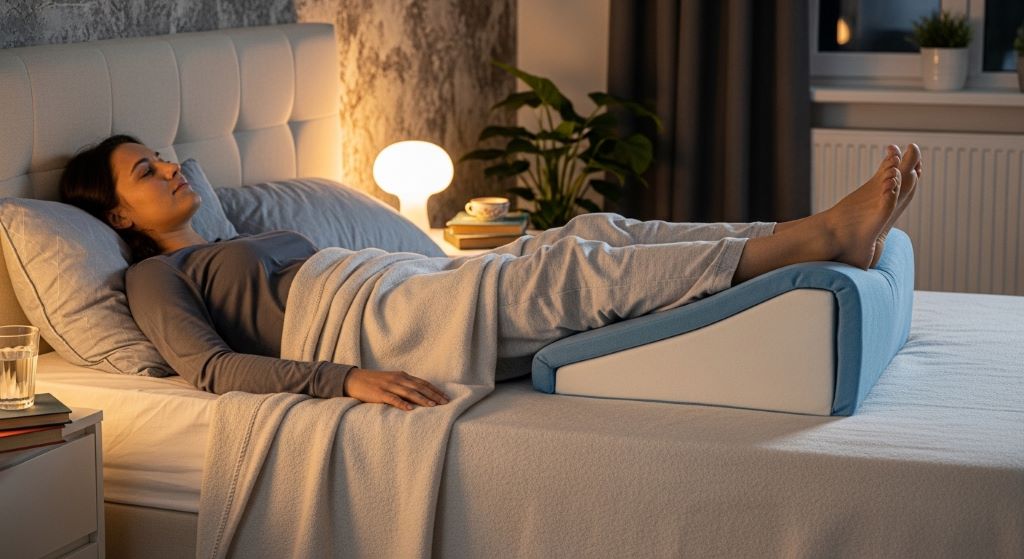
For leg elevation, you place the pillow under your calves and feet. The inclined surface lifts your legs gradually and keeps them elevated without putting strain on your joints. This steady support is what makes a wedge pillow different from stacking regular pillows, which tend to collapse and misalign during sleep.
The leg elevation pillow works best when it raises your legs about six to twelve inches above your heart level. That range is generally considered ideal for encouraging circulation and providing swelling relief tips that doctors often suggest.
Key Factors to Consider Before Buying
The Angle of Elevation
The angle of a wedge pillow determines how high your legs will be raised. Most wedge pillows come in angles between 30 and 45 degrees. A 30-degree angle is gentler and works well for everyday use, especially if you are new to leg elevation. A 45-degree angle provides more significant lift and is often recommended for more severe swelling.
If you are unsure which angle suits you, start with a mid-range option. Some pillows even offer adjustable layers so you can change the height as needed.
Foam Density and Material Quality
Not all foam is the same. The material inside the pillow affects both comfort and durability. Memory foam conforms to the shape of your legs, which can reduce pressure points and feel more comfortable over time. However, it tends to retain heat, which can be an issue for some people.
High-density foam is firmer and holds its shape better. It is a great choice if you need consistent support without the pillow compressing too much. Some pillows combine both types — a firm base with a softer top layer — which can give you the best of both worlds.
Avoid pillows made with very low-density foam. They feel soft at first but flatten quickly, making them ineffective within a few weeks.
Size and Length
The size of the pillow matters more than most people expect. A wedge pillow that is too short will only support your ankles and feet, leaving your calves unsupported. This can create pressure points behind your knees, which is uncomfortable and counterproductive.
A full-length leg wedge should ideally support the area from the back of your knees to your heels. This distributes your leg weight evenly and keeps everything properly aligned. Look for a pillow that is at least 24 inches long for average-sized adults.
Additionally, width is worth checking. A wider pillow allows more freedom of movement during sleep without worrying about slipping off the edges.
Cover Material and Washability
You will be spending hours each night resting your legs on this pillow. Therefore, the cover material should be soft, breathable, and easy to clean. Bamboo-blend covers are a popular choice because they are naturally cooling and gentle on the skin.
Look for covers with a zipper that allows easy removal for washing. Machine-washable covers are highly practical. Swelling is often accompanied by warmth and discomfort, so a cover that keeps you cool can make a noticeable difference in sleep quality.
Avoid covers made entirely from synthetic materials that trap heat. They may feel fine at first but become uncomfortable during longer use.
Firmness Level
Firmness is a personal preference, but it also depends on your specific needs. People with more significant swelling tend to benefit from firmer pillows that maintain elevation consistently throughout the night. Softer pillows feel more plush but may sink too much to be effective.
A good rule of thumb is to press your hand into the pillow and check how quickly it springs back. A pillow that compresses too easily under light pressure will likely flatten under the weight of your legs, reducing the therapeutic benefit.
Types of Wedge Pillows Available
Standard Foam Wedge Pillows
These are the most widely available option. They are affordable, come in a range of angles and sizes, and work well for most everyday needs. Standard foam wedges are a solid starting point if you are new to leg elevation therapy.
However, they may not suit everyone. If you tend to sleep on your side or shift positions frequently, a standard wedge can feel restrictive.
Memory Foam Wedge Pillows
Memory foam wedge pillows offer a more customized feel. The foam responds to your body heat and weight, cradling your legs gently. This can be especially helpful for people with joint pain or sensitivity in the lower limbs.
The downside is cost and heat retention. Memory foam pillows are generally more expensive, and they can feel warm. Pairing them with a cooling cover helps manage this issue.
Inflatable Wedge Pillows
Inflatable options are ideal for travel or for those who need flexibility in elevation height. You can adjust the firmness and height by adding or releasing air. They are lightweight and easy to pack.
However, they are not as durable as foam options and may not provide the consistent support needed for nightly use. Additionally, they can develop leaks over time, reducing their effectiveness.
Multi-Layer Adjustable Wedge Pillows
These are newer designs that allow you to stack or remove foam layers to change the angle. They offer the most versatility and can grow with your changing needs. If your doctor recommends different elevation levels at different stages of recovery, this type is worth considering.
They tend to cost more, but the flexibility often justifies the price for long-term users.
How to Use a Wedge Pillow Correctly
Placing the pillow correctly is just as important as choosing the right one. Here are some basic guidelines to follow:
Position the wide base of the wedge flat on the mattress or floor
Place your calves and heels on the inclined surface, not just your feet
Make sure your knees are slightly bent rather than locked straight
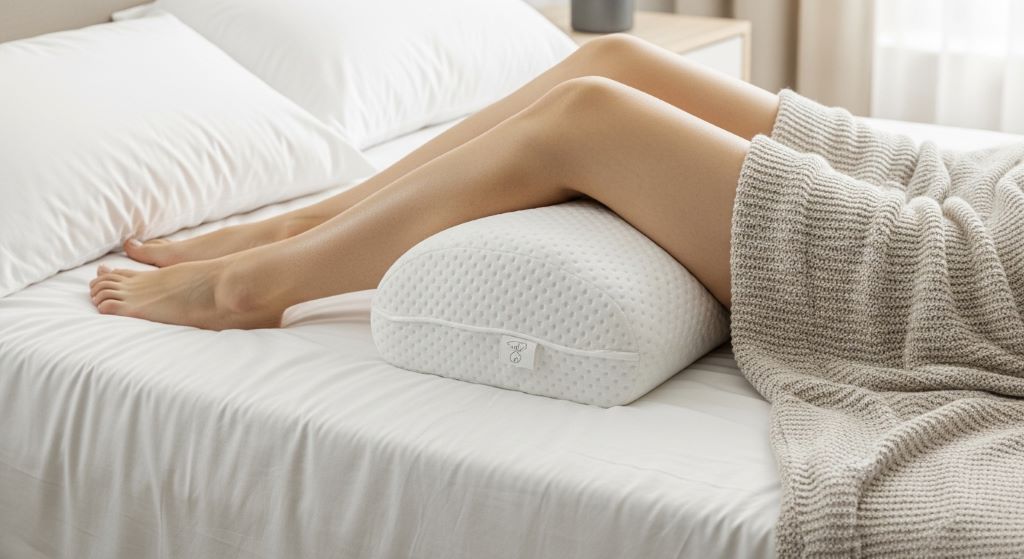
Avoid placing the pillow directly under your knees, as this can reduce blood flow
Use the pillow consistently, ideally for 20 to 30 minutes during the day and throughout the night while sleeping
Additionally, wearing compression socks alongside the pillow can enhance the results. These two approaches work well together and are among the most common swelling relief tips shared by healthcare professionals.
When to See a Doctor
A wedge pillow can help manage mild to moderate leg swelling. However, it is not a substitute for medical care. If your swelling is severe, comes on suddenly, or is accompanied by redness, warmth, or pain, see a doctor promptly. These could be signs of a blood clot or another condition that needs treatment.
Also, consult a healthcare provider if your swelling does not improve after consistent elevation over several days. In some cases, the cause needs to be addressed directly before the symptom improves.
Tips for Getting the Most Out of Your Wedge Pillow
Getting the most out of your purchase involves a few simple habits. First, use the pillow every day, not just when the swelling becomes noticeable. Prevention is easier than recovery.
Second, combine elevation with movement. Short walks throughout the day keep circulation active and prevent fluid from pooling. Elevation works best when it complements an active lifestyle rather than replacing movement entirely.
Third, stay hydrated. It might seem counterintuitive, but drinking enough water actually helps reduce fluid retention. When the body is dehydrated, it tends to hold onto water more aggressively. Therefore, keeping up with your fluid intake supports overall swelling management.
Finally, pay attention to your sleeping position. For most people, sleeping on their back with legs elevated works best. Side sleepers can still use a wedge, but they may need additional support along the body to maintain comfort.
What to Avoid When Choosing a Wedge Pillow
Some common mistakes can make your purchase less effective. Avoid buying the cheapest option without checking the foam density. Low-quality foam will flatten quickly, leaving you with nothing more than a lump of material under your legs.
Also, do not skip the size check. A pillow that is too small creates pressure points and may do more harm than good. Furthermore, avoid pillows without removable covers. Hygiene matters, especially for nightly use.
Finally, do not rely on brand reputation alone. A well-known name does not always mean the right fit for your specific needs. Read user reviews from people with similar conditions to get a clearer picture of how the product performs in real life.
Conclusion
Managing leg swelling at home does not have to be complicated. A well-chosen wedge pillow can make a significant difference in how you feel each day and night. The right product lifts your legs at the correct angle, supports your calves evenly, and remains firm throughout the night.
To make the best choice, focus on angle, foam density, size, and cover quality. Consider your sleeping position and whether you need adjustable height options. Use the leg elevation pillow consistently and pair it with other healthy habits like staying hydrated and moving regularly.
Swelling relief takes time, but the right tools make the process much more manageable. Investing in a quality wedge pillow is a simple step that pays off in greater comfort, better sleep, and improved circulation over time.
Frequently Asked Questions
How high should my legs be elevated to reduce swelling?
Most healthcare providers recommend elevating your legs six to twelve inches above heart level. A wedge pillow with a 30 to 45-degree angle typically achieves this range and is suitable for most people.
Can I use a wedge pillow every night without any issues?
Yes. Most people can safely use a wedge pillow every night. In fact, consistent nightly use tends to produce better results than occasional use. If you experience discomfort in your lower back or knees, adjust the position or try a different angle.
Is a leg elevation pillow helpful during pregnancy?
A leg elevation pillow is commonly recommended during pregnancy to manage swelling in the ankles and feet. However, pregnant women should consult their doctor about the safest sleeping position and elevation height for their stage of pregnancy.
What is the difference between a wedge pillow and stacking regular pillows?
Regular pillows shift and flatten overnight, which means they often stop providing support while you sleep. A wedge pillow holds its shape and maintains consistent elevation throughout the night, making it far more effective for therapeutic use.
How long does it take to see results from leg elevation?
Many people notice a reduction in swelling after a few days of consistent elevation. For chronic conditions, it may take a few weeks to see meaningful improvement. Pairing elevation with other swelling relief tips — such as compression socks and staying hydrated — can speed up results.