The bag feels reasonable when you hoist it at the trailhead. Three miles later, every ounce in the sleeping system seems to have doubled, and the pack that felt manageable is now pressing into your shoulders with every step. Sleeping gear is usually the biggest single contributor to pack weight on an overnight trip, which is why it’s the first place experienced campers look when they want to cut pounds. There’s a catch, though: go too light in the wrong places and you’ll spend the night cold, which defeats the purpose entirely. Getting the balance right starts with understanding how each piece of your sleep system works together, from your insulation to your sleeping pad and even a proper PeakPillows option that won’t wreck your neck or your base weight. This guide covers what to cut, what to keep, and how to pack it all efficiently.
Quick Answer
Pack lightweight sleeping gear by treating your sleep system as three separate components — insulation, padding, and comfort items — and optimizing each one for the conditions you’ll actually face. Choose a sleeping bag or quilt rated for the lowest temperature you expect, use an insulated pad with an appropriate R-value, and keep extras like pillows small and compressible. Add a pillow if you need it for sleep quality, but limit “just in case” items. The single biggest weight savings come from your bag or quilt and your pad, because they’re the heaviest pieces. Consolidate, compress, and pack them in the order you’ll use them.
Key Takeaways
- Your sleeping bag or quilt and sleeping pad are the heaviest parts of your sleep system, so weight savings there matter most.
- There’s a real trade-off between weight and warmth: ultralight gear often costs more and requires more care.
- R-value matters as much as the temperature rating on your bag, especially for cold sleepers.
- Compression and packing order affect both pack volume and how quickly you can set up camp.
- A small comfort item like a pillow can be worth its weight if it helps you actually sleep.
Why Sleep Gear Usually Weighs More Than It Should
Most campers overpack their sleep system for two predictable reasons: fear of being cold and habit. A tent, a bag, a liner, a full-size pillow, and an extra blanket feel safe at home but add up fast on the trail. The fix isn’t to strip everything down to survival levels — it’s to match your gear to the actual conditions you’ll face and stop carrying redundant insulation.
A few common weight culprits:
- Sleeping bags rated far colder than the forecast (a 20°F bag for a 55°F summer night)
- Foam pads that don’t compress, carried alongside an inflatable pad
- Full-size pillows instead of compact, packable options
- Cotton liners, heavy stuff sacks, and duplicate layers
Each of these is manageable on its own, but together they can add several pounds. Deciding what actually earns its place in your pack is the core skill here.
How to Choose a Sleeping Bag or Quilt for Weight
Your bag or quilt is the heaviest piece of your sleep system, so it’s the highest-value place to make a decision. Down is lighter and more compressible than synthetic insulation, but it loses warmth when wet and costs more. Synthetic insulation keeps more of its warmth in damp conditions, but it’s heavier and bulkier for the same temperature rating, If you are waking up stiff or sore after a long day on the trail, improper spine support might be to blame—learn more about Why Neck Pain Worsens in Austin, TX Beds.
A few practical points:
- Match the temperature rating to the coldest night you realistically expect, then add a small margin for cold sleepers.
- Quilts cut weight by removing the back insulation, which compresses under you anyway — but they demand a quality pad underneath.
- A lower-limit rating (the temperature where a warm sleeper stays comfortable) is more useful than a comfort rating, which is typically warmer.
If you’re comparing a traditional bag against a quilt, the decision usually comes down to how you sleep and how much you want to spend.
| Feature | Sleeping Bag (Mummy Style) | Backpacking Quilt |
|---|---|---|
| Typical weight | Heavier for the same warmth | Lighter and more compressible |
| Coverage | Full enclosure, less draft-prone | Open back, relies on your pad |
| Best for | Cold sleepers, colder trips | Warmer trips, weight-conscious hikers |
| Cost | Often less expensive | Usually more expensive |
The takeaway: quilts save weight, but only if you pair them with a proper pad and are willing to manage drafts. A mummy bag is the safer default for colder or less experienced campers.
Don’t Skip the Sleeping Pad — R-value Matters
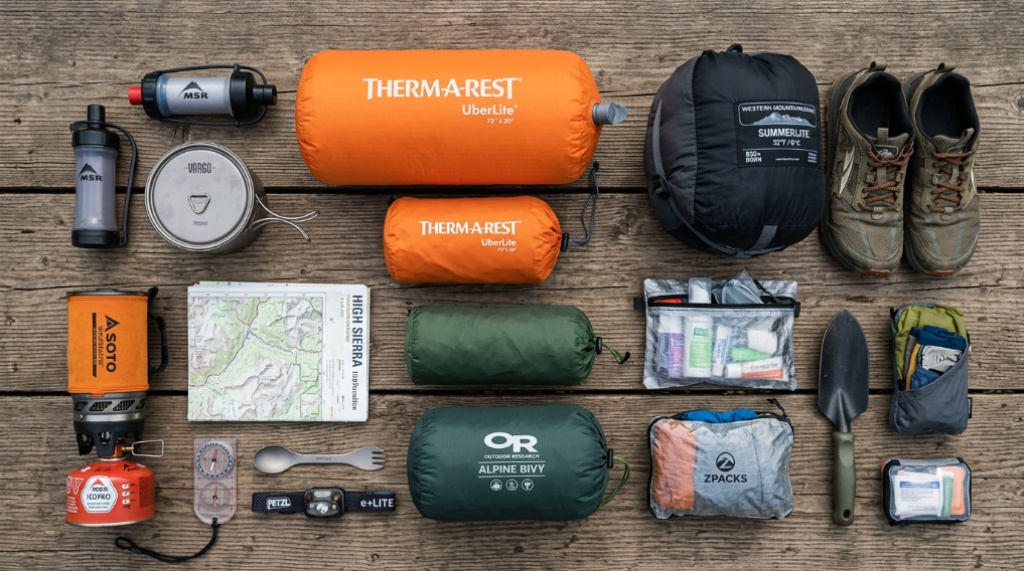
Here’s where many campers go wrong: they cut weight by downgrading the pad. A pad is not just cushioning; it’s insulation that stops your body heat from leaking into the ground. A high-quality bag over a thin foam pad will leave you cold, while a modest bag over a high R-value pad will often keep you comfortable.
R-value is the insulation rating for pads, and higher numbers mean more warmth. For three-season camping, look for a pad that balances weight with insulation; for cold-weather trips, the R-value requirement climbs quickly. Inflatable pads pack small but can puncture, while closed-cell foam pads are nearly indestructible but bulkier and usually warmer only in specific configurations.
The best approach is usually one inflatable pad sized to your body, matched to your bag or quilt’s temperature range, rather than stacking two pads “for safety.”
Packing Order and Compression: The Step-by-Step
Once you’ve chosen your gear, how you pack it affects both comfort and weight distribution. Heavy items should ride close to your spine and around your shoulders, with lighter gear pushed toward the bottom and top of the pack.
- Line your pack with a trash bag or pack liner. This protects your insulation from rain, which is especially important for down. A pack cover alone won’t keep water out of a soaked bag.
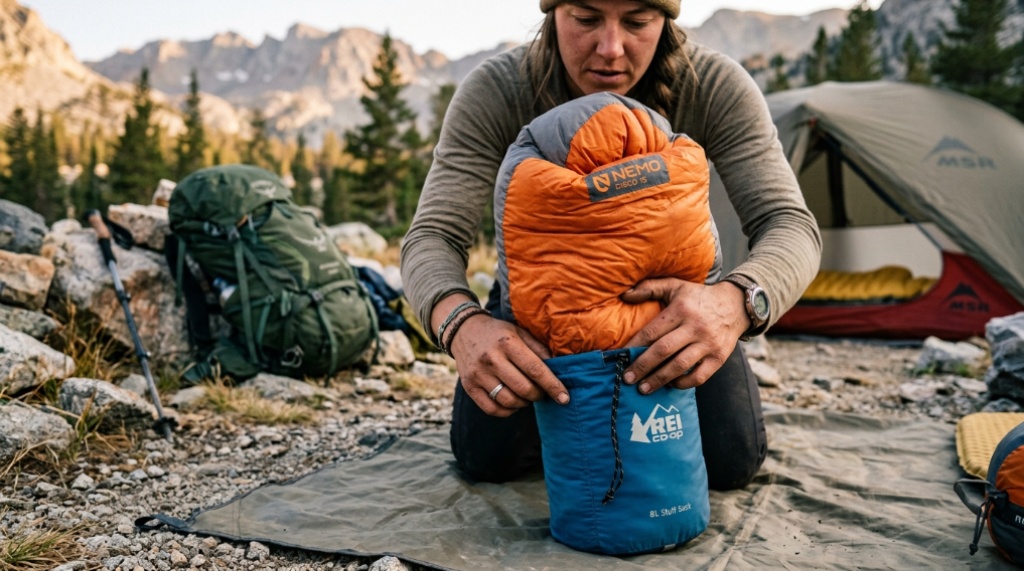
- Stuff your bag or quilt into the bottom of the pack. Compress it hard — a compression sack helps, but a loose stuff into the bottom of your main compartment often fills dead space better.
- Place your sleeping pad next. An inflatable pad compresses into a small package; put it against your back or along the side of the pack.
- Pack clothing and food around the middle. These heavier, denser items stay close to your center of gravity.
- Keep your pillow and a headlamp at the top. You want quick access to these when you arrive at camp and when you’re trying to find your way to bed in the dark.
One underrated tip: pack your sleep clothes in a separate waterproof bag. Putting on dry, dedicated clothing at night dramatically improves how warm your bag feels, and it costs almost no extra pack weight.
Pillows, Comfort Items, and What’s Worth the Weight
A pillow is optional gear, but poor sleep on the trail leads to bad days after it. The trade-off is straightforward: full-size pillows add bulk and weight, while ultralight inflatable pillows may not suit everyone. This is a genuinely personal decision — if a pillow is the difference between sleeping and lying awake, it earns its place.
When choosing what to bring, ask:
- Does this item improve my ability to sleep? (Sleep quality compounds over multi-day trips.)
- Is there a lighter version that still works? (Inflatable or compressible options usually are.)
- Can I leave it home on warm trips and bring it only when needed?
For a rough sense of what various sleeping setups weigh, lightweight gear reviews and comparisons can help you see how different options stack up before you buy.
Common Mistakes That Add Ounces
Even careful packers repeat a few of these mistakes:
- Carrying two sleeping pads. Rarely necessary and always heavy — pick one that matches the conditions.
- Using the stuff sack your bag came with. A compression sack or loose stuffing in the pack liner usually saves bulk.
- Overpacking extra layers for sleep. One clean base layer is usually enough; a second set rarely gets worn.
- Ignoring the forecast. A bag rated 20°F colder than the weather adds unnecessary weight for no benefit.
- Forgetting a dry layer for bedtime. Damp clothing performs poorly as insulation, which pushes you toward bringing a heavier bag “just in case.”
Fixing these habits often saves more weight than switching gear categories entirely.
Frequently Asked Questions
Is a sleeping bag or a quilt lighter for backpacking?
Quilts are generally lighter for the same warmth because they remove insulation that would compress under your body. The trade-off is that quilts need a well-insulated pad underneath and can be draftier, so they suit warm sleepers and milder conditions better than cold sleepers on winter trips.
What R-value do I need for three-season camping?
For three-season use, an R-value around 3 to 4 covers most conditions for average sleepers. Cold sleepers or shoulder-season trips benefit from higher values. As ground temperatures drop, the insulation between you and the soil matters more than the temperature rating printed on your bag.
Should I bring a pillow on a backpacking trip?
Bring one if sleeping quality matters to you, which for most people it does. Compact inflatable or compressible pillows add minimal weight and pack small. If you’re chasing the lowest possible base weight, a rolled-up jacket stuffed into a stuff sack works in a pinch.
How do I stop my sleeping bag from getting damp?
Use a pack liner or waterproof stuff sack inside your backpack, not just a pack cover. Down insulation loses much of its warmth when wet, so keeping your bag dry is more important than shaving a few grams off a stuff sack. Also avoid storing a damp bag compressed for long periods.
Can I pack my sleeping pad and bag together?
Yes, and doing so can save space. Many hikers stuff the bag into the bottom of the pack and slide the deflated pad alongside it. Just keep the pad away from sharp objects and keep both inside a waterproof liner.
Conclusion
Lightweight sleeping gear comes down to one idea: match each piece to the conditions you’ll actually face, and stop carrying insulation you won’t need. Focus your effort on the bag or quilt and the pad, since that’s where the real weight lives. Keep comfort items like a pillow small and only when they truly help you sleep. Pack everything into a waterproof liner, compress your insulation, and put the heavy pieces close to your spine. Do that, and you’ll carry less without sleeping worse — which is the whole point of going lighter.